During the making of LickMV, AI storyboard design was one of the most debated features.
The debate was not whether we could build it. It was whether we should. Storyboarding is subjective. A professional director uses visual language: angle, framing, rhythm, and transitions all carry intent. If AI does this, is it helping users, or taking away a creative decision?
We discussed this for a long time.
The reason was simple: very few of our users actually have storyboard design skills.
For most users, the concept itself is unfamiliar. They do not know how many scenes a three-minute song needs, how to match visual changes to emotional changes, or how to pace a video.
You can accept it, change it, reject it, or rebuild on top of it. The important thing is that you are not staring at a blank board.
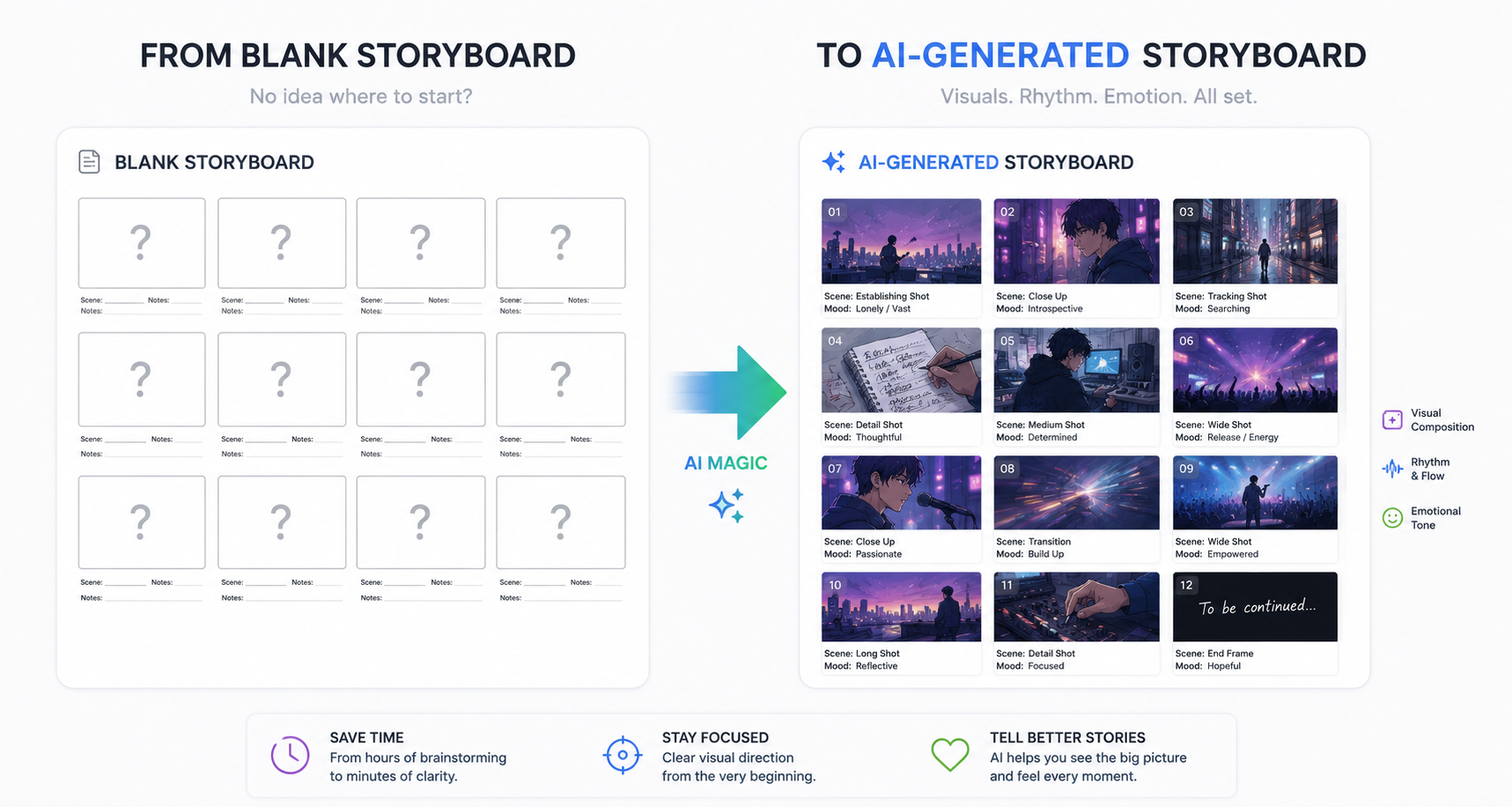
We may not always get it perfect, but we keep this principle in mind: a tool should be easy to use without making people stop thinking.
Question: when AI helps with creative decisions, does it free you or take something away?